
It’s time for my annual list of the best books I read in 2025. This past year was a good reading year for me. Here are some books that most impacted my thinking, came up in my conversations, and were simply the most enjoyable.
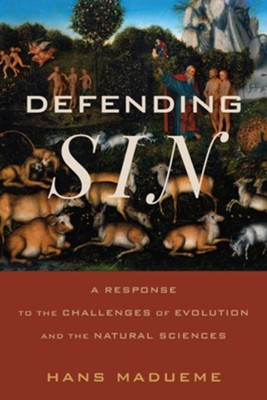
Theology: Defending Sin by Hans Madueme
How are Christians to think of the relationship between science and faith? When there is conflict between biblical doctrine and modern scientific consensus, how do we respond? Hans Madueme, a young earth creationist, contends for this view in a unique way by defending the doctrine of sin. He argues that the classical notions of sin as taught in Scripture, and reflected in creeds and Protestant confessions, remain true and necessary for Christians today, even in a post-Darwinian world. To embrace an evolutionary explanation of the origin or development of life on earth would require a pretty radical departure and redefinition of the traditional understanding of key doctrines such as: creation’s original goodness, the unity of humanity, the fall of Adam and Eve, original sin and its consequences, and more. This is more of a philosophical argument than typically found in a scientific or apologetic work. I find it compelling and helpful. After all, I’m a pastor and not a scientist. So this was more my wheelhouse. I found his paradigm for valuing science while holding to biblical authority, which he calls Biblical Realism, especially helpful.
Politics & Religion: King of Kings by James Baird
What does it mean that Jesus is the King of Kings? Christians have always debated how to think about the role of government in relation to Christianity broadly, or the relationship of church and state. This discussion is not going to be settled anytime soon. Should Christians desire or expect a civil government to favor Christianity? Must governments promote no religion at all, or treat all religions equally? What is the responsibility and expectation for human governments under God’s rule? Not easy questions at all, and Christians of good will disagree. James Baird wrote a short book last year seeking to retrieve a more classical Protestant Reformed understanding of these matters. He offers a simple syllogism (a logical argument where two premises, if true, lead to a conclusion that is also necessarily true) to prove his conclusion: (spoiler alert) the government must promote Christianity as the only true religion. You’ll have to read and decide for yourself if he made his case. I personally found much of the argument commendable. An all around fascinating read.
Productivity: Do More Better by Tim Challies
Organization is not my strong suit. Thinking about efficiency doesn’t excite me. Of necessity, I’ve had to work on it over the years. There are so many books on the subject of productivity that it’s like wading through the latest diet or fitness book. I’m not saying this is the best book on the subject, but it has three points in its favor: (1) it’s short, just over 100 pages; (2) it’s simple and practical; and (3) it’s theological. The opening chapter about what it means to do good works for the Lord and practicing stewardship are worth the price of the book alone. If you need help organizing your tasks and responsibilities, whether for work or home, you may find this helpful.
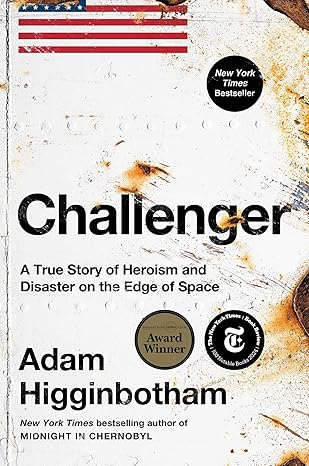
History: Challenger by Adam Higginbotham
Space travel is fascinating to me. I’m also drawn to historical tragedies. The story of the loss of the Challenger shuttle is both. It is at once a history of the American space program, culminating in the shuttle program, and also a touching narrative of the astronauts who would lose their lives. I was too young to remember the event, but for many this was a defining moment of a generation, similar to 9/11 for millennials. This book highlights the amazing feats NASA was able to accomplish, especially in their Apollo missions. Yet it also demonstrates the hubris that success created in the agency, leading to fatal errors. The shuttle program never really delivered on its original promises, but the story well told is still full of wonder.
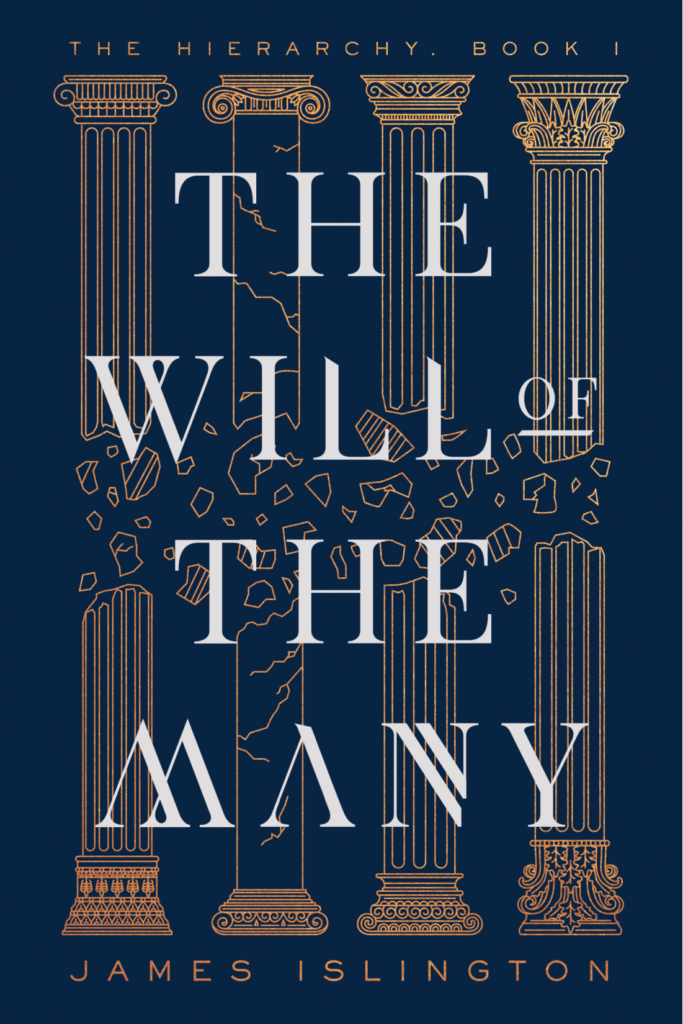
Fiction: The Will of the Many by James Islington
I read a lot more fiction in 2025 than in previous years. I tend to stick to genres: mystery, sci-fi, fantasy, suspense, classic lit. The Will of the Many is a fantasy novel and is easily the fiction book I recommended most to others last year. It feels like a mixture of Dune, Harry Potter, and classic fantasy but in a more Roman Empire-themed world. You have an orphan as a main character, an academy with dark secrets, political intrigue, friendship, some romance, a spy mission, a murder mystery, ancient power uncovered, a deadly competition, a unique magic system, and a startling ending that leaves you asking questions and wanting more. If that is your thing, give it a try. The second book came out in November.
0 Comments